
Successful IT projects don’t happen by chance; they emerge from structured planning, precise estimating, and disciplined management. Chapter 3 focuses on the core estimating techniques and essential tools that shape a project from early conception to final implementation. This chapter also explores the contents of a comprehensive project plan and the purpose of maintaining a well-organized project notebook—two indispensable components of professional project management.
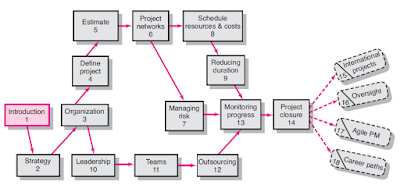
Project Plan Contents
A project plan is more than a document—it is the central guiding framework that defines how the project will be executed, monitored, and controlled. In IT project environments, where tasks are complex and interdependent, a structured plan ensures clarity, alignment, and predictability.
This chapter covers key elements found in a formal project plan:
1. Statement of Work (SOW)
The SOW outlines the purpose, goals, deliverables, and overall scope of the project. It sets expectations between the project team and the customer.
2. Work Breakdown Structure (WBS)
The WBS decomposes the project into manageable tasks and work packages. It forms the backbone for estimating cost, time, and resources.
3. Responsibility Assignment Matrices (RAM)
A RAM—commonly known as a RACI chart—clarifies who is Responsible, Accountable, Consulted, and Informed for each major task. It prevents confusion and ensures accountability.
4. Project Schedule
The schedule translates the WBS into a timeline, showing when each activity begins and ends. This includes Gantt charts, network diagrams, and milestone charts.
5. Resource Plans and Histograms
A resource plan identifies human and non-human resources (equipment, facilities, materials). Histograms visually display resource usage over time, highlighting periods of under- or over-allocation.
6. Budget
The project budget includes cost estimates for labor, equipment, materials, and overhead. It serves as the financial baseline for monitoring and controlling project expenditures.
7. Risk Management Plan
The risk plan identifies potential threats, analyzes their impact, and outlines mitigation strategies. Effective risk management reduces uncertainty and enhances project success.
8. Communications Plan
A communications plan defines what will be communicated, who will receive it, when it will be sent, and through which channels. It ensures that all stakeholders remain informed and aligned.
9. Quality Plan
The quality plan outlines the standards, procedures, and metrics required to ensure the deliverables meet customer expectations and organizational requirements.
10. Verification and Validation Plan
This plan describes how deliverables will be tested, inspected, or reviewed to ensure they function correctly (verification) and meet user needs (validation).
Together, these components create a structured, reliable blueprint for project execution.
The Project Notebook
A project notebook serves as the complete record of all project information, from early planning to final close-out. It ensures documentation, traceability, and transparency throughout the project lifecycle.
The project notebook is typically divided into four major sections:
1. Project Pre-Plan
This section contains foundational information collected before detailed planning begins:
-
Background information
-
Customer data
-
Vendor and supplier information
-
Early requirements or constraints
This material forms the basis for building the formal project plan.
2. Project Plan
This section includes the formal, approved plan and its essential components:
-
Statement of Work (SOW)
-
Work Breakdown Structure (WBS)
-
Organization and responsibility charts
-
Schedule data
-
Budget and capital plan
-
Risk management documentation
This becomes the operational blueprint for the project team.
3. Project Implementation
As the project progresses, this section captures all activity-related records, including:
-
Meeting agendas and minutes
-
Progress reports from team, management, customers, and third parties
-
Customer change requests
-
Issue resolution documents or decision matrices
This documentation creates a real-time audit trail of project execution.
4. Project Close-Out
When the project is completed, this section summarizes final outcomes:
-
Evaluation of success indicators
-
Close-out meeting notes
-
Final project report
-
Reference letters or certifications
-
Lessons learned
Close-out documentation provides valuable insights for future projects and organizational improvement.
5. Project Administration
Administrative documentation is maintained throughout the project and often includes:
-
Contractual documents
-
Invoices and receipts
-
Expense tracking
-
Official correspondence
-
Contact logs
This section ensures compliance with legal, financial, and organizational requirements.
Conclusion
This chapter illustrates how each component of the project plan contributes to building a structured, predictable, and well-controlled project environment. Equally important is the project notebook, which serves as the central repository of all project information across its lifecycle.
Together, these elements support accurate estimation, clear communication, disciplined execution, and meaningful evaluation. By mastering these tools and techniques, IT project managers gain the ability to plan confidently, navigate complexity, and deliver successful outcomes in even the most demanding project environments.
PROJECT NOTEBOOK
- Project Pre-plan
- Background information
- Customer data
- Third-party data (vendors, suppliers, etc.)
- Project Plan
- Statement of Work (SOW)
- Work Breakdown Structure (WBS)
- Organization/responsibility charts
- Schedule data
- Budget/capital plan
- Risk management
- Project Implementation
- Meetings (agenda/minutes)
- Team/management/customer/third party progress reports
- Customer change requests/decision matrix issue resolution forms/reports
- Project Close-out
- Final evaluation of measurable success indicators
- Close-out meeting (agenda/minutes)
- Final project report
- Reference letters
- Lessons learned
- Project Administration
- Contractual documents
- Invoices
- Expenses
- Correspondence
- Contact logFurther in this chapter we will be discussing each of the components regarding a project planning and management. All these are necessary features to design a successful project.

IT Project Management - Chapter 3 Project Estimating Techniques and Tools
No comments:
Post a Comment